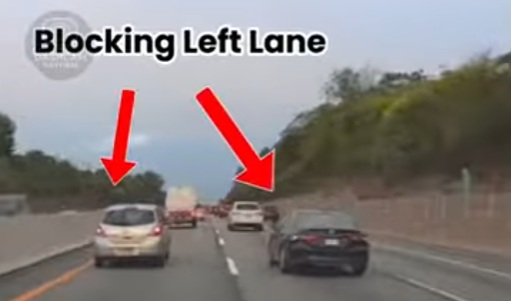
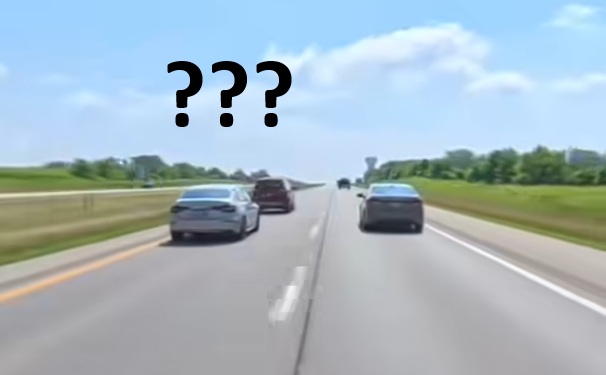
Recently captured dashcam footage perfectly illustrates one of the most common and frustrating problems on our highways: drivers camping in the left lane and preventing the normal flow of traffic. In the documented case, one driver was forced to weave dangerously between lanes, getting alarmingly close to other vehicles—all because other drivers were blocking all available lanes.
What Is the Left Lane Actually For?
The left lane is designated for passing and faster-moving traffic—not for casual cruising. In many U.S. states, there are laws requiring drivers to move out of the left lane when they’re not actively passing someone. Some states even have “keep right except to pass” laws that make left-lane camping illegal and punishable by fines.
When drivers “hog” the left lane and travel at the same speed as traffic in other lanes, they create artificial congestion that leads to dangerous situations.
What’s the Problem with This Behavior?
The video demonstrates exactly what happens when drivers don’t practice proper lane discipline:
- Dangerous driving: When all lanes are blocked, frustrated drivers begin weaving aggressively and dangerously between cars
- Unsafe following distances: The driver in the footage gets dangerously close to other vehicles—a situation that could easily result in a serious collision
- Unnecessary congestion: Instead of smooth traffic flow, a “fake traffic jam” is created that could have been easily prevented
So Who’s at Fault Here?
The question posed at the end of the video is excellent: “Are the other drivers wrong for creating fake traffic?”
The answer is absolutely yes.
While the weaving driver is certainly putting himself and others at risk, this situation was created by drivers who aren’t maintaining proper lane discipline. When you’re driving in the left lane and see a vehicle behind you that wants to pass—move over to the right. It’s simple, it’s safer, and in many states, it’s the law.
The Simple Rules for Proper Driving
- Drive in the right lane as your default position
- Move left only to pass—and immediately return to the right lane after passing
- If there’s a faster vehicle behind you—move over and let them pass
- Don’t be a “highway vigilante”—it’s not your job to enforce speed limits on other drivers
Understanding State Laws
Many states have specific laws about left lane usage:
- “Keep Right Except to Pass” states: In these states, you must stay right unless actively passing
- “Slower Traffic Keep Right” states: You must move right if you’re traveling slower than the normal speed of traffic
- States with left lane restrictions: Some states prohibit left lane driving entirely on certain highways, regardless of speed
Violating these laws can result in tickets ranging from $50 to over $200, depending on your state.
The Ripple Effect
Left lane hogging doesn’t just frustrate other drivers—it creates a cascade of problems:
- Forces aggressive passing on the right, which is more dangerous
- Increases the likelihood of road rage incidents
- Reduces overall highway capacity and efficiency
- Creates unnecessary traffic congestion
Bottom Line
Proper lane discipline isn’t just about following the law—it’s about safety, efficiency, and mutual respect among drivers. The documented incident shows exactly where improper driving leads: to dangerous situations that could have been easily avoided.
Remember: Left lane for passing, right lane for traveling. It really is that simple.
By practicing proper lane etiquette, you’re not just being courteous—you’re making our highways safer for everyone. The next time you find yourself cruising in the left lane, ask yourself: “Am I actively passing someone?” If the answer is no, it’s time to move over.
Let’s work together to keep traffic flowing safely and smoothly. Move over, and let faster traffic pass. Your cooperation makes all the difference.