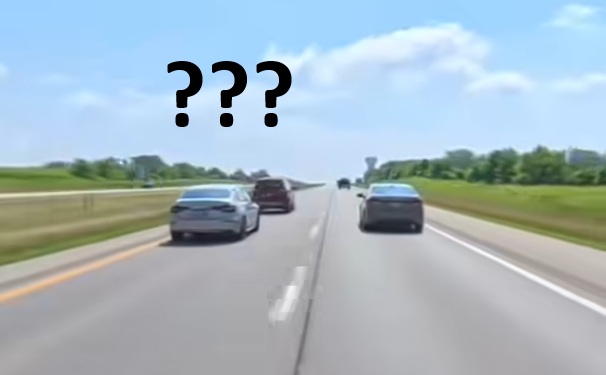
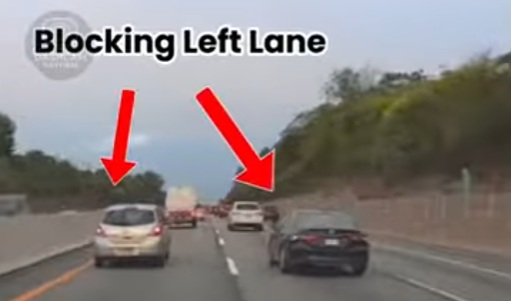
Driving on American roads is more than a technical skill; it is a commitment to a complex system of rules that can vary significantly from state to state. While automotive safety technology has leaped forward over the last decade, statistics from the National Highway Traffic Safety Administration (NHTSA) reveal a sobering reality: Human error remains the primary catalyst for road fatalities.
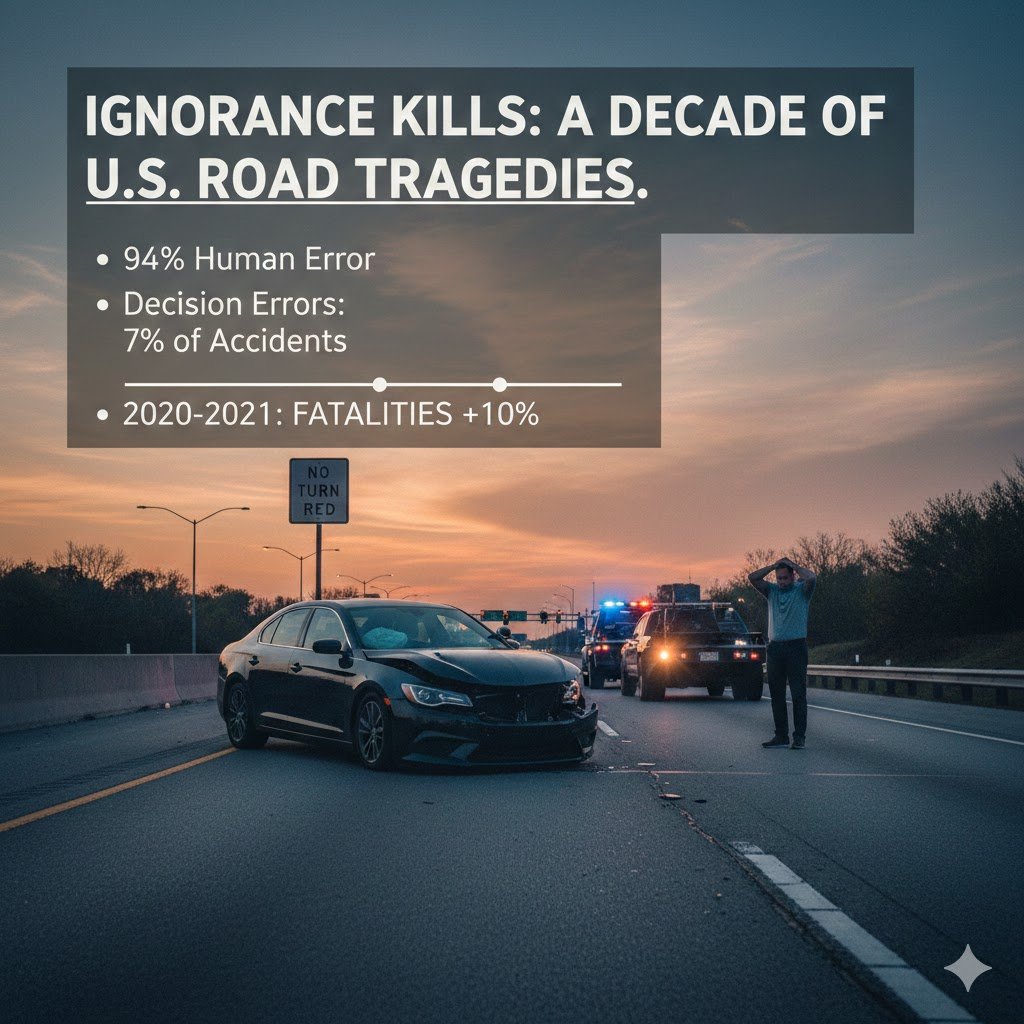
The Staggering Figure: 94% of Crashes are Human-Caused
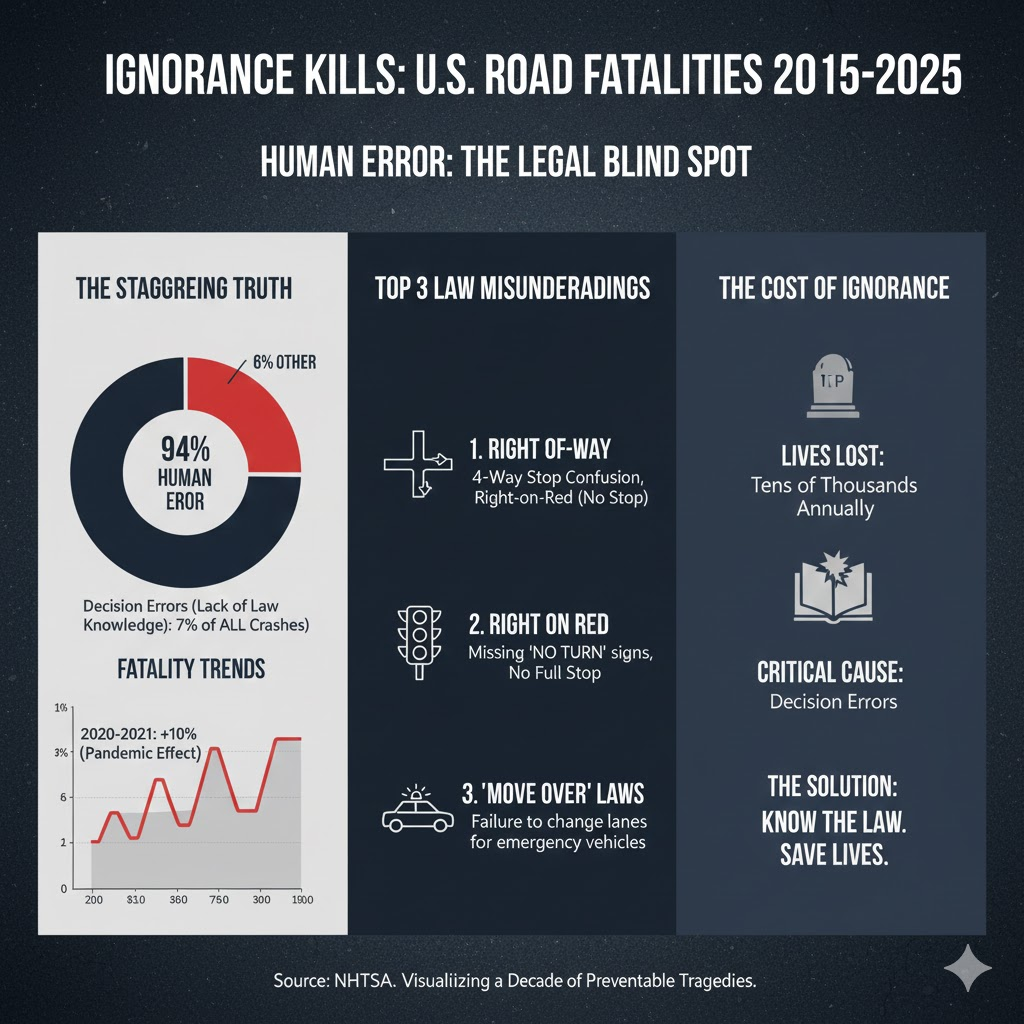
Throughout the last decade, the data has remained chillingly consistent. Approximately 94% of all motor vehicle accidents in the U.S. are caused by human error. While many drivers are quick to blame inclement weather or mechanical failure, those factors account for only about 2% to 4% of cases.
According to NHTSA’s classification, a significant portion of these errors fall under “Decision Errors.” This is where a lack of legal knowledge—or a misunderstanding of local traffic statutes—plays a critical role.
Ignorance of the Law: Common Mistakes with Deadly Consequences
Many drivers in the U.S.—including new drivers, tourists, and residents moving between states—violate traffic laws not out of criminal intent, but simply because they do not fully understand the local regulations. Here are the critical areas where legal confusion led to high accident rates over the last decade:
1. Right-of-Way Misunderstandings
Failure to yield the right-of-way is a leading cause of intersection accidents.
- The Error: Misinterpreting “First to arrive, first to go” at 4-Way Stops, or failing to realize that at an uncontrolled intersection, the vehicle to the right typically has the right-of-way.
- The Impact: These decision-based errors contributed to nearly 7% of critical pre-crash events in recent years.
2. “Right on Red” Confusion
The U.S. is famous for allowing right turns on red, but the nuances of the law are often missed.
- The Error: Many drivers fail to make a complete stop before turning, or they ignore “No Turn on Red” signs in specific jurisdictions. This leads to high-velocity side-impact (T-bone) collisions.
3. “Move Over” Laws
This is one of the most frequently violated laws due to a lack of public awareness.
- The Law: Drivers are required to slow down and, if safe, change lanes when emergency vehicles (police, ambulance, tow trucks) are stopped on the shoulder.
- The Result: Lack of familiarity with this law has resulted in thousands of “struck-by” incidents involving first responders over the past ten years.
Decadal Trends: 2015 to 2025
- 2015–2019: A steady rise in fatalities was largely attributed to the “Distracted Driving” epidemic, where human error met smartphone technology.
- 2020–2021 (The Pandemic Spike): Despite fewer cars on the road, traffic fatalities jumped by over 10%. NHTSA experts attributed this to a “breakdown in law-abiding behavior,” with drivers ignoring speed limits and traffic signals due to perceived lack of enforcement.
- 2023–2025: As we reached the mid-2020s, we began seeing a slight decline (roughly 3%–8%) in fatalities thanks to widespread Autonomous Emergency Braking (AEB). However, the rate of accidents caused by disregarding basic traffic laws has remained stubbornly high.
Conclusion: Knowledge is Your Second Seatbelt
The statistics of the last decade prove that even the safest car cannot protect a driver who doesn’t know the rules of the road. Human errors rooted in a lack of legal knowledge are preventable.
In the United States, traffic laws are not merely suggestions—they are the framework that keeps traffic flowing and keeps you alive. Before you cross state lines or renew your license, take the time to review your local Driver’s Manual. What you don’t know can hurt you.